Reformer
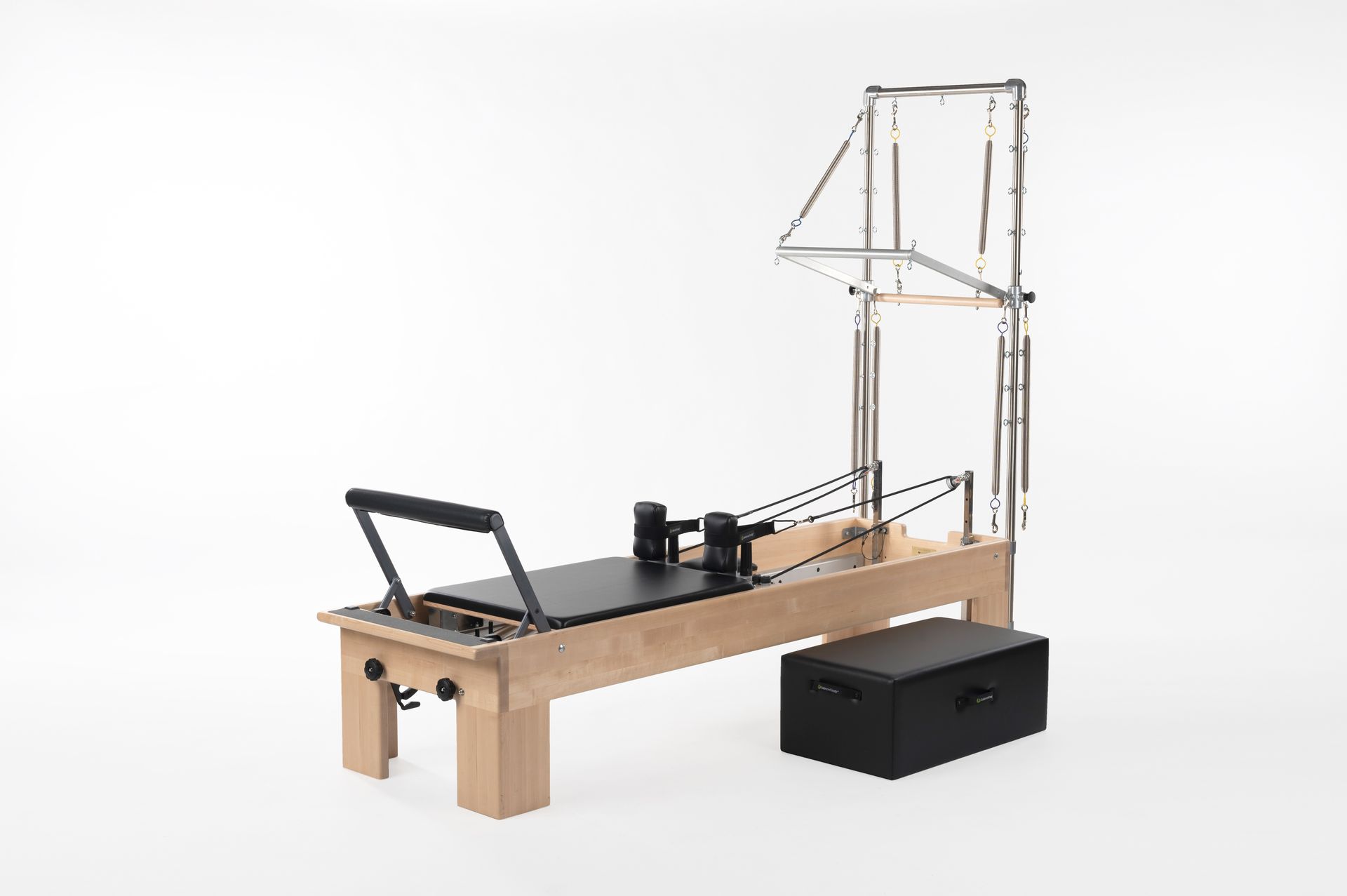
The Reformer is the most recognised piece of Pilates apparatus. A sliding carriage sits within a rectangular frame and is attached to a spring system that provides adjustable resistance. Handles, straps and a footbar allow exercises to be performed lying, seated, kneeling or standing. It trains the whole body through dynamic, spring-assisted movement, building strength, length and coordination simultaneously. It is suitable for beginners and advanced practitioners alike, and its adjustability makes it particularly valuable for injury rehabilitation and progressive conditioning.
Tower
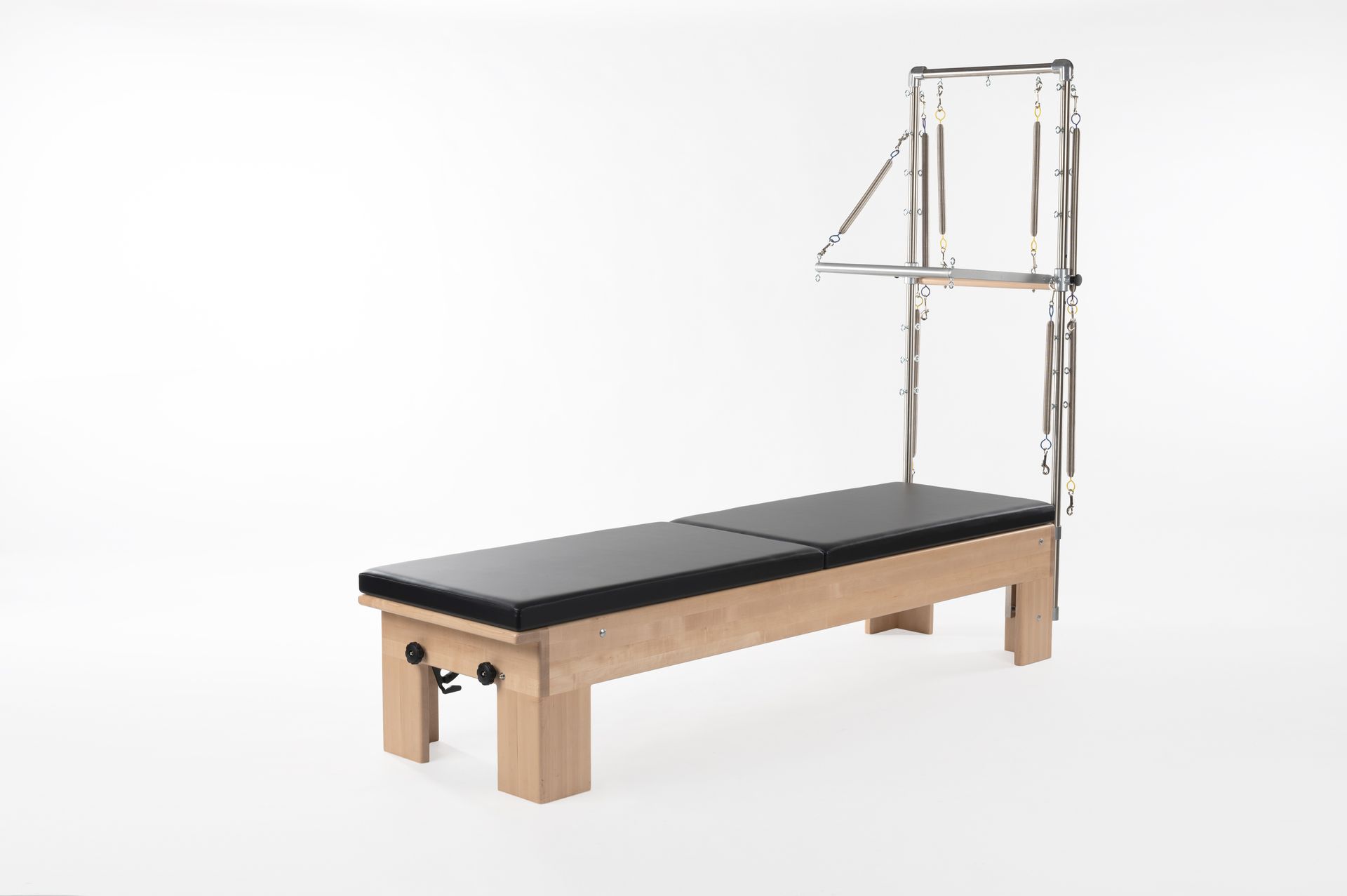
The Tower combines elements of the Reformer and the Cadillac in a format suitable for group classes. Using arm springs, leg springs, a push-through bar and a roll-up bar, the Tower applies external resistance to mat-based exercises and standing work, revealing muscular imbalances and developing balanced strength through multiple planes of movement.
Cadillac
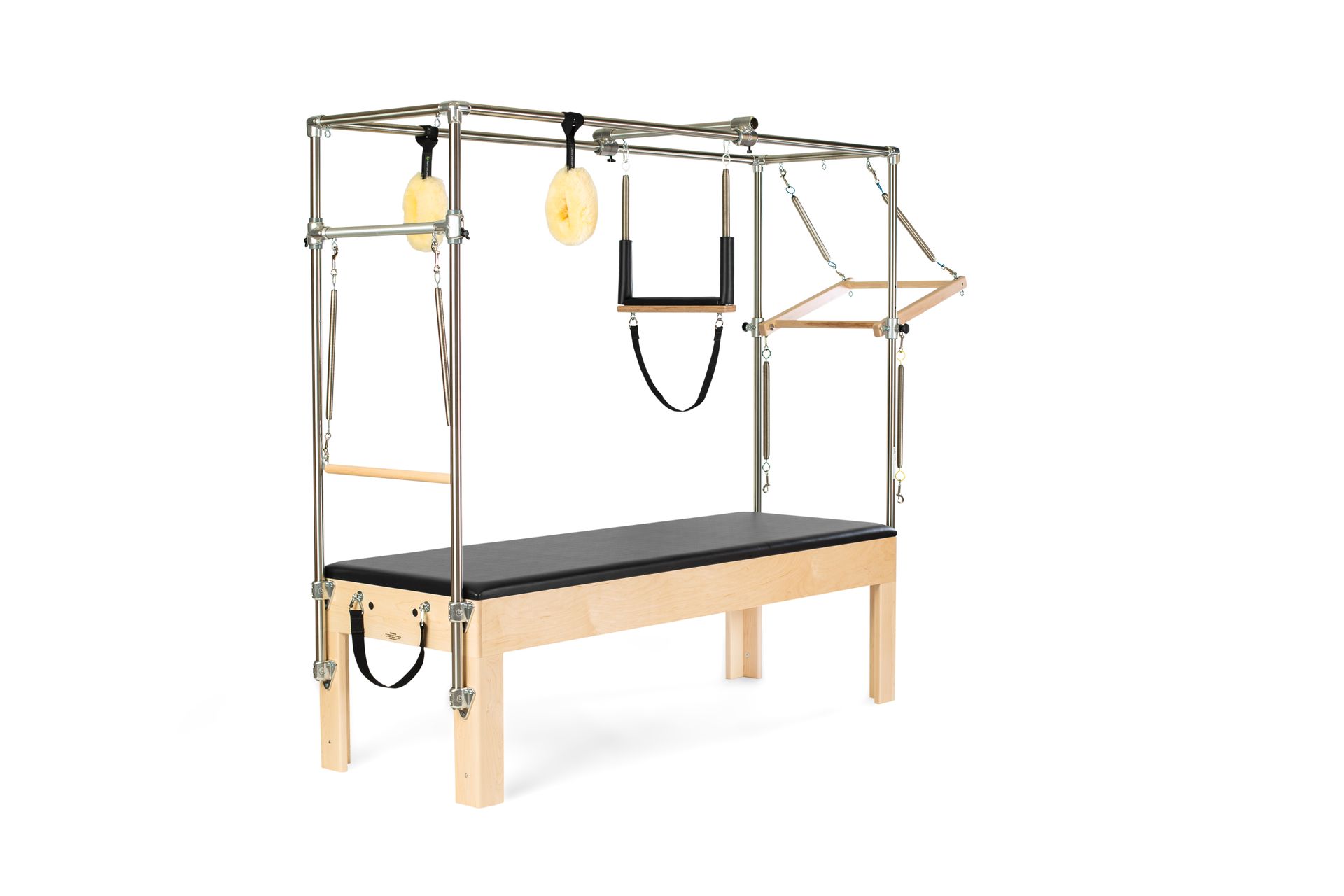
The Cadillac, also known as the Trapeze Table, is the most versatile piece of Pilates apparatus - engineered for stability, adjustability, and safety, it supports exercise and rehabilitation. A raised padded table sits within a four-post metal frame from which springs, bars, a trapeze and straps can be rigged at varying heights. The Cadillac supports the broadest range of exercises in the system — from gentle spinal articulation and decompression through to advanced gymnastic-style movements. Because each limb works independently through its own spring, it is particularly effective for identifying and correcting asymmetries, and for working with clients who need a highly adapted approach, including those recovering from injury.
Wunda Chair
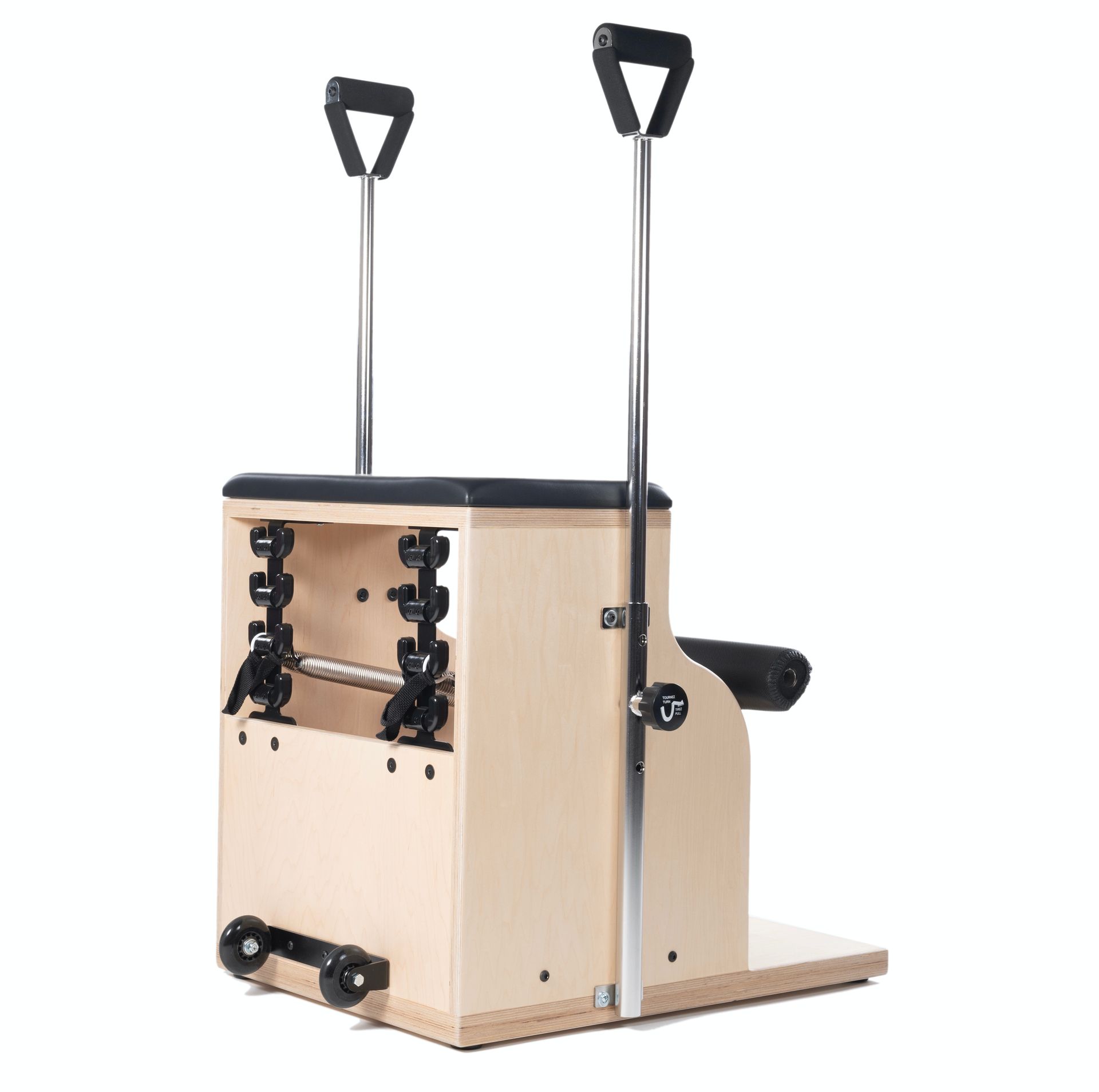
A compact, spring-loaded apparatus consisting of a padded split pedal to increase functionality and allow for exercises that use rotational and reciprocal movement in the extremities. Its minimal surface area demands high levels of balance, core stability and body control. Exercises are performed sitting, standing, kneeling or balancing on or around the chair. Despite its size, it is one of the most challenging pieces of Pilates apparatus precisely because there is nowhere to hide — it quickly reveals and addresses imbalances in stability and coordination. The Chair is also highly practical for functional and standing-based rehabilitation work. Our studio uses an evolution of the Wunda Chair design called the Combo Chair.
Ladder Barrel
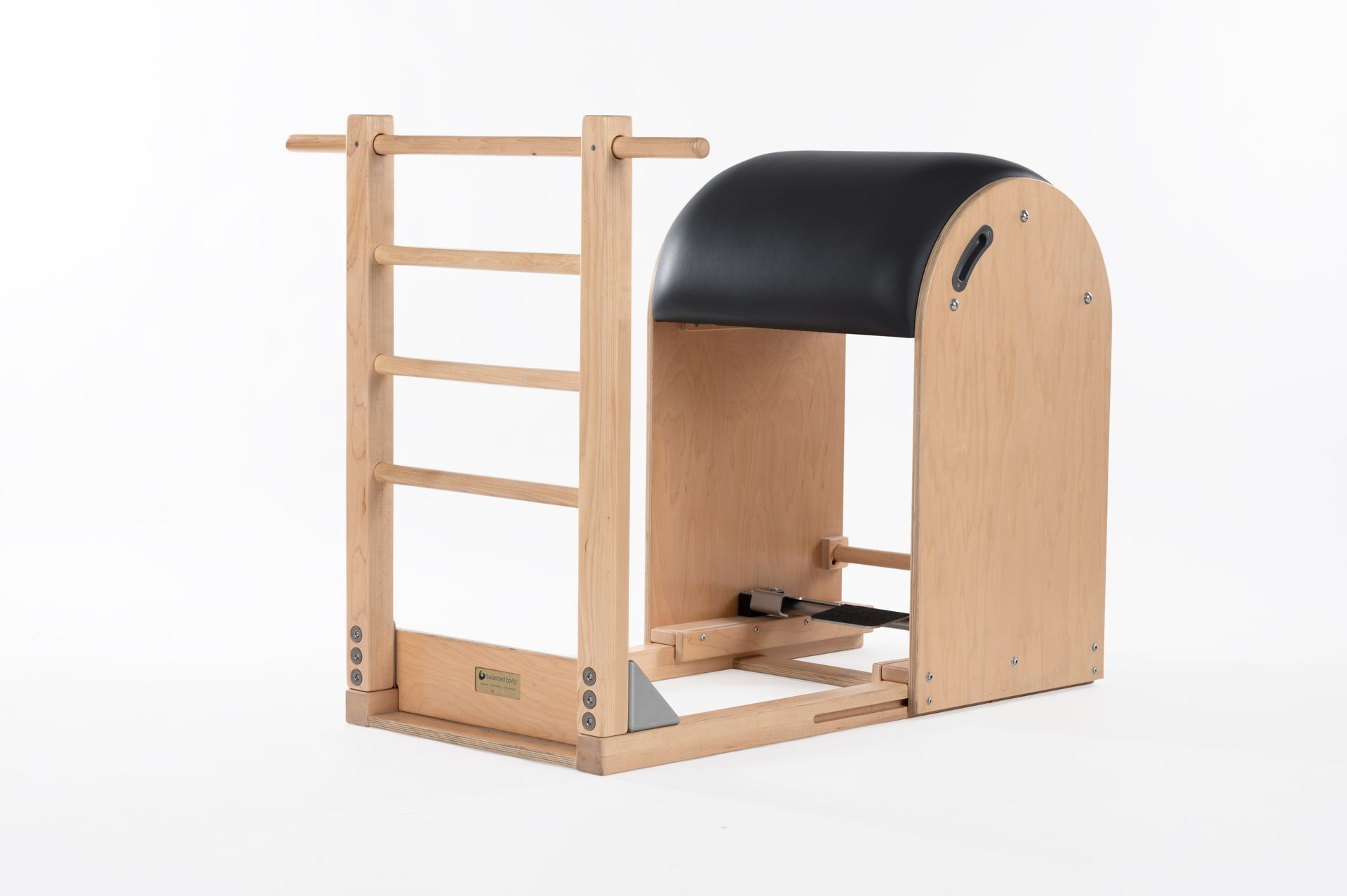
The Pilates Ladder Barrel is a spring-free piece of apparatus designed to enhance core strength, flexibility and balance. The rounded surface and connected series of rungs enables deep stretches and challenging exercises to improve posture and effectively targeting muscles in the back, legs, and abdominals. The shape is particularly beneficial for working on spinal mobility and core strength.
Spine Corrector
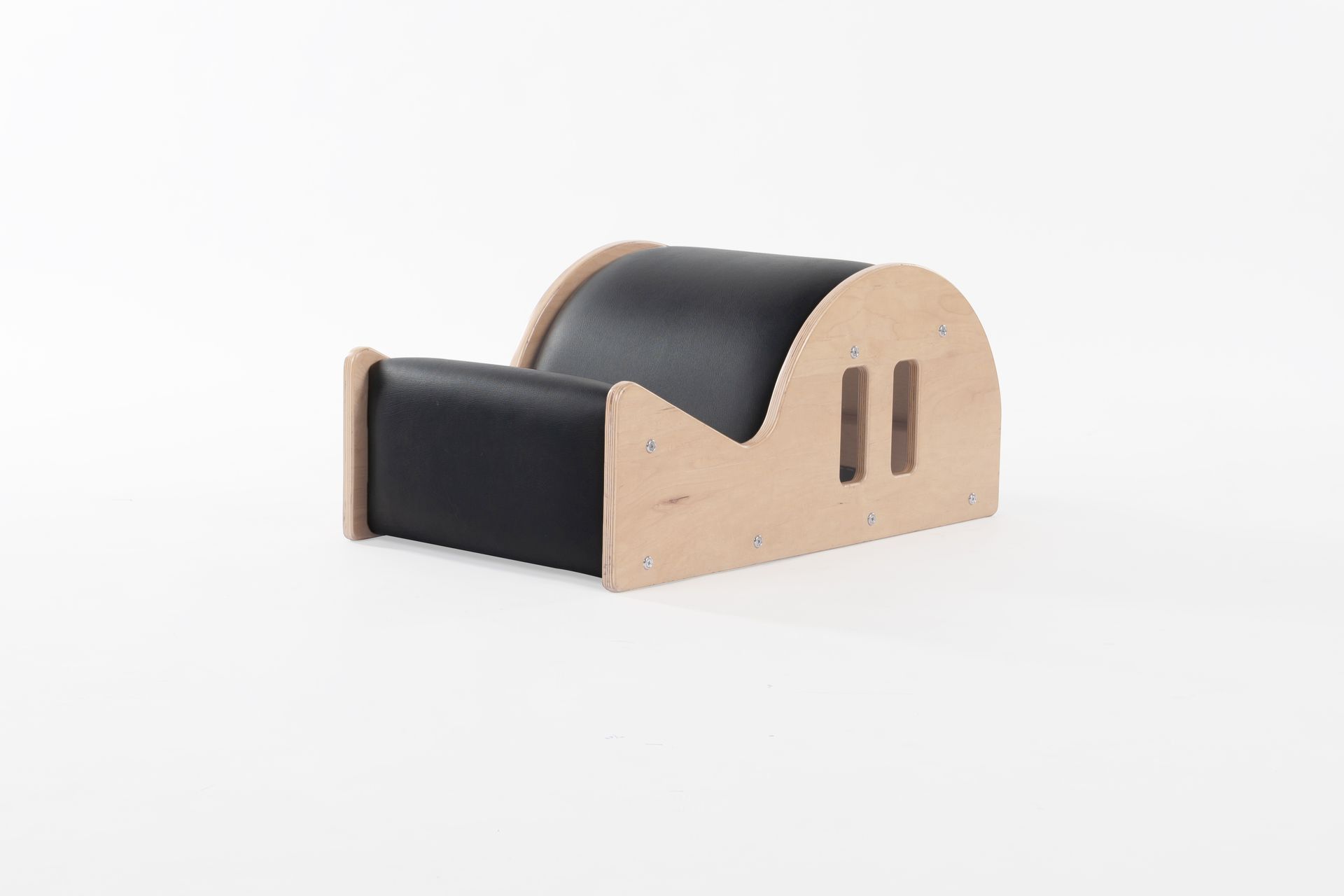
The Pilates Spine Corrector is designed to improve posture, increase flexibility, and strengthen the core. It facilitates exercises that focus on spinal articulation, targeting the back, abdominals, and hips to promote alignment and reduce tension in the body. As Joseph Pilates famously said, “You are only as young as your spine is flexible.”
CONTACT US
1-3 Hamilton Road
Bangor BT20 4JP
ph: 077 5222 8585
inflowpilatesNI@gmail.com
**Studio entrance is at the rear of the property on Bingham Lane.**

Inflow Pilates works with individuals at every stage of life helping you build and transform your core strength, balance, flexibility and develop deep mind-body awareness into your life whether you are new to Pilates, returning to movement or managing challenges.
© 2026
All Rights Reserved | Inflow Pilates